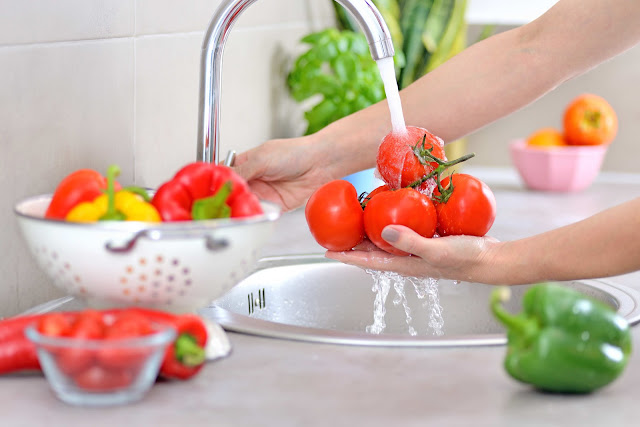
Reducing bacteria and residues on fruits and vegetables can be achieved by washing them with water. While produce with more crevices can be swished in a basin of water to remove dirt, most produce can be cleaned with a simple gentle scrape.
A nutritious approach to obtaining important vitamins, minerals, fiber, and antioxidants is to eat a diet rich in fresh fruits and vegetables.
Rinsing fresh fruits and vegetables well with water before eating has long been recommended to remove any unwanted residues from their surfaces.
Why it’s important to wash fresh produce
Regardless of a global pandemic, making it a habit to properly wash
fresh fruits and vegetables is crucial to minimize the intake of
potentially harmful residues and germs.
Before reaching your kitchen, fresh produce passes through the hands
of various people in grocery stores or farmers markets. It’s prudent to
assume that not every pair of hands touching the produce has been clean.
Given the constant flow of people in these environments, it’s also
reasonable to assume that the fresh produce may have been exposed to
coughing, sneezing, and breathing.
Thoroughly washing fresh fruits and vegetables before consumption can
significantly reduce residues left on them during their journey to your
kitchen.
Cleaning your fruits and vegetables is a straightforward process,
though it’s easy to miss a step that could compromise the safety of the
produce. Here’s a simple guide:
- Choose Quality Produce: Start by selecting fresh
produce without bruises, mold, or damage. If buying precut items, ensure
they’ve been refrigerated or displayed on ice, and check the expiration
date. - Proper Storage: Keep perishable fruits and
vegetables in the refrigerator (unless they’re best at room temperature)
at 40°F or below. Always refrigerate precut items. - Hand Hygiene: Wash your hands with soap and warm water for 20 seconds before and after handling fresh produce.
- Preparation Before Peeling: Wash the produce before
peeling or shredding to prevent contaminants from transferring from the
knife to the fruit or vegetable. - Rinsing Process: Hold the produce under cool
running tap water, gently rubbing it as you rinse. No need for soap,
except for mushrooms. Use a sharp paring knife to cut away damaged
areas. - For Firm Produce: Use a clean vegetable brush to scrub surfaces of melons and winter squash.
- Produce with Uneven Surfaces: Soak bumpy produce
like cauliflower and broccoli for 1 to 2 minutes in cold water (after
removing outer leaves), then rinse again. - Drying: Use a clean cloth or paper towel to dry the produce before using it.
Special Attention to Salad Greens
- Leafy Lettuces: Discard wilted outer leaves, remove the root end, and separate leaves under cold running water.
- Smaller Greens (Spinach, Arugula): Swirl them in a bowl or sink filled with cold water for about 30 seconds, shake gently, and drain in a colander.
- Iceberg Lettuce: Remove the core by hitting the
stem end on the countertop. Hold under cold running water, pulling
leaves apart slightly, and invert to drain. - Mesclun: Rinse in a colander or salad spinner basket.
Additional Tips for Safely Washing Fruits and Vegetables
When it comes to ensuring the safety and health of your produce, it’s
natural to consider going the extra mile in the cleaning process. Here
are some important reminders for washing fruit, vegetables, and lettuce:
- Avoid Soap or Detergents: Refrain from using soap or detergents when washing produce. Stick to simpler methods for effective cleaning.
- No Need for Special Washes: You don’t have to
invest in specialized produce washes. Using cool, clean, running tap
water is sufficient for cleaning fruits and vegetables. - Wash Before Peeling: Clean all produce before
using, even if you plan to peel it. Dirt and bacteria on the unwashed
exterior can transfer into the fruit or vegetable when using a knife.
The Baking Soda Fruit Wash
A study at the University of Massachusetts Amherst revealed that a
combination of baking soda and water was more effective at removing
pesticides from apple skins than water alone. While our Test Kitchen
found no harm in trying this fruit wash—soaking apples for 2 to 12
minutes in a solution of 1 tsp. baking soda and 2 cups water, then
rinsing—we lack the tools to measure remaining pesticides.
Now that you know the right way to wash fruits and vegetables, you
can confidently keep all your nutritious produce safe for use in berry
desserts, healthy salads, or plant-based meals with just a little meat.